Off-Grid Heating · Scotland
Oil Boiler Replacement in Scotland
Quick answer
Oil boilers can still be replaced in Scotland, and a modern condensing oil boiler is the simplest like-for-like swap for homes off the gas grid. For well-insulated rural properties, an air source heat pump can be a practical alternative that removes the need for oil deliveries. A proper survey determines which route suits your home.
What are the key facts?
Last updated: 11 November 2026- Who needs this: Scottish homes off the gas grid using oil heating
- Options: Like-for-like oil replacement or switch to an air source heat pump
- Installer: OFTEC-registered and certified partners
- Finance: Interest-free credit up to £30,000, subject to status
- Tank inspection: Oil tank condition checked during survey
- Coverage: Rural Scotland including Aberdeenshire, Perthshire, Galloway
Off-Grid Heating
Oil heating across rural Scotland
A large number of Scottish homes, particularly across the Highlands, Aberdeenshire, Perthshire, and the Borders, rely on kerosene oil because they sit beyond the mains gas network. Oil heating is well understood, dependable in cold weather, and a modern condensing boiler can achieve over ninety per cent efficiency. For many off-grid households a like-for-like oil boiler replacement remains the most straightforward option.
The main drawbacks of oil are the reliance on deliveries, price fluctuations through the winter, and the need for on-site storage that meets environmental standards. When an old oil boiler fails, homeowners often use the moment to ask whether it is worth switching to something that does not need a tank at all.
The honest answer is that it depends on the fabric of the building. A draughty stone cottage may be better served by a high-efficiency oil boiler for now, while a well-insulated modern rural home may be an ideal candidate for a heat pump. We help you compare the two on real numbers, not assumptions.
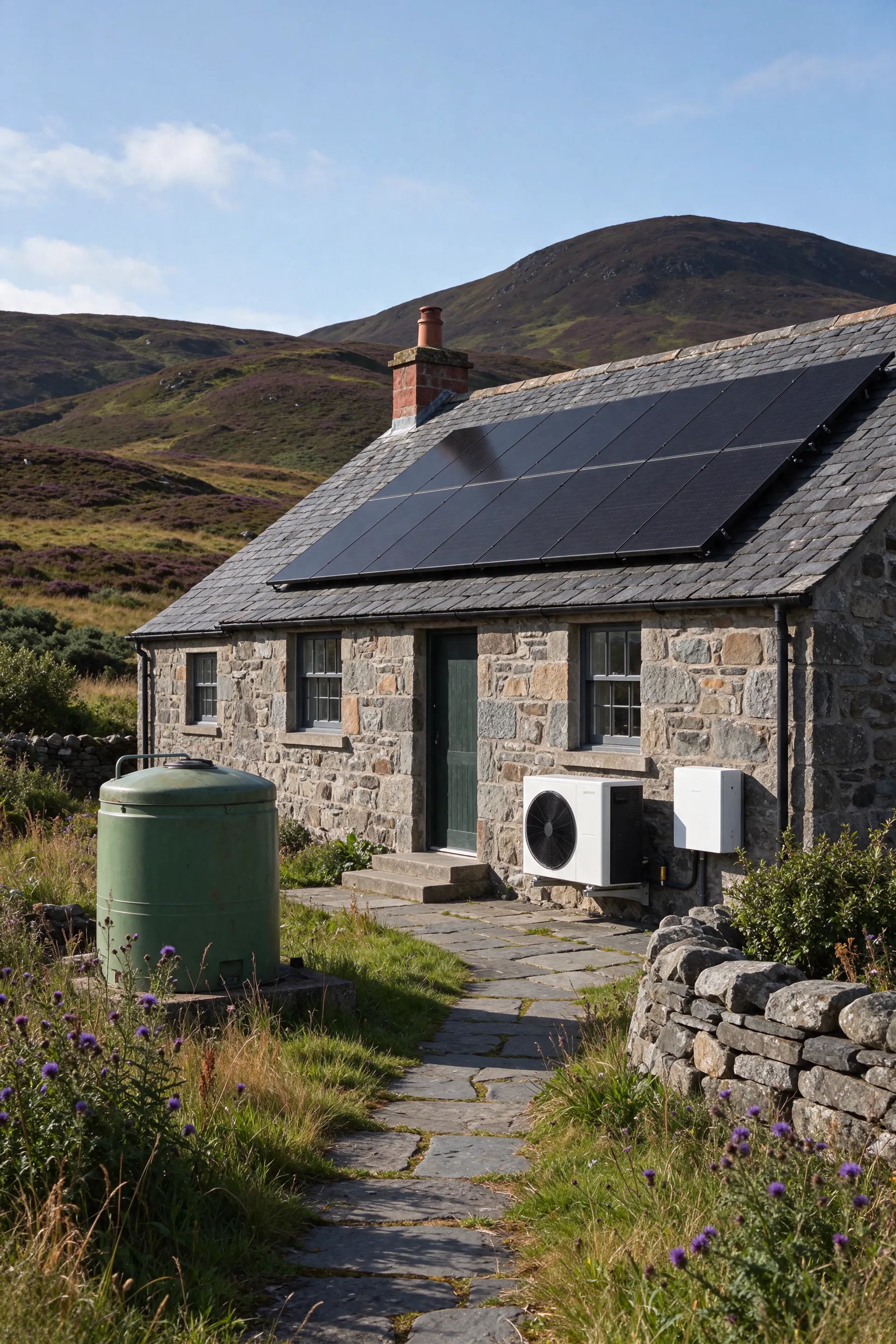
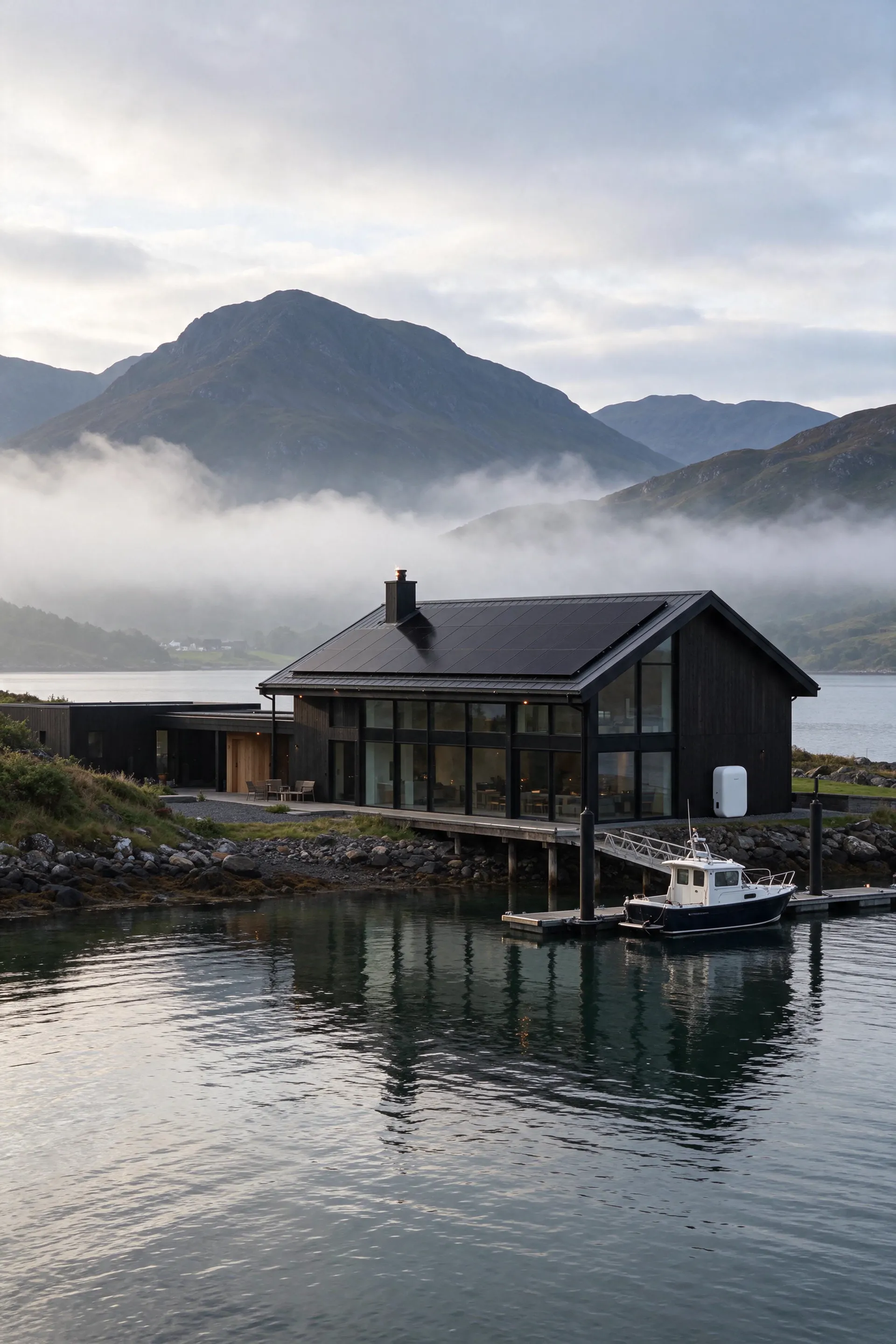
Replace or Switch
Replace the oil boiler or switch systems?
Replacing an old oil boiler with a new condensing model is generally the lower-cost and faster route. The pipework, radiators, and oil tank can usually stay, the work takes a day or two, and there is no need to change how the home is heated. This is often the right choice when the building is hard to insulate or the budget does not stretch to a full system change.
Switching to an air source heat pump removes oil deliveries and the tank entirely. Heat pumps run on electricity, so running costs depend on your tariff and how efficiently your home holds heat. The trade-off is a higher upfront cost and the need for good insulation, and sometimes larger radiators or underfloor heating, so the heat pump can deliver the lower flow temperatures it is designed for.
Some homes are not ready for a heat pump today but will be after a fabric upgrade. In those cases a modern oil boiler now, with a plan to revisit a heat pump in a few years, is a reasonable staged approach. A proper survey gives you the figures to make that call with confidence.
Storage & Pipework
Your oil tank and pipework
When you replace an oil boiler, the tank and the oil supply line deserve as much attention as the boiler itself. Scottish building standards and environmental guidance generally require bunded, double-skinned tanks for new and replacement installations, particularly when the tank is close to a boundary, a watercourse, or a drain. An old single-skin steel tank is often the weakest link in an otherwise sound system.
The oil feed line between the tank and the boiler should be checked for degradation, particularly if it runs underground. Modern installations use a continuous plastic-coated copper or flexible pipework with a remote-fire valve that shuts off the oil at the tank if heat is detected near the boiler. These details are part of a compliant installation and are checked at the survey stage.
Annual servicing of an oil boiler is especially important because kerosene combustion produces soot that builds up on the burner nozzle and heat exchanger, quietly reducing efficiency long before the boiler stops working.
Questions
Frequently asked questions
Yes, oil boilers can still be installed and replaced in Scotland. There is no outright ban on oil heating. The latest Building Standards require any new or replacement oil boiler to be at least ninety per cent efficient, which in practice means a modern condensing kerosene boiler. Existing oil systems can continue to run, and like-for-like replacements remain a common choice for off-grid homes.
Off the gas grid and thinking about your oil boiler?
Call us for straightforward advice on replacing your oil boiler or switching to a heat pump. We install through certified partners across rural Scotland.
Related guides
What should you read next?
Last updated: 11 November 2026
Reviewed by the Scottish Energy Efficiency team