Energy Storage · Scotland
Battery Storage in Scotland
Quick answer
A home battery stores electricity from your solar panels or the grid so you can use it later, helping you use more of your own generation and shift consumption away from peak tariffs. Paired with solar and a heat pump, battery storage can meaningfully reduce the electricity you buy. A survey sizes the battery to your actual usage.
What are the key facts?
Last updated: 11 November 2026- What it does: Stores surplus solar or off-peak electricity for use later
- Installer: Installed through certified partners
- Pairs with: Solar panels and air source heat pumps
- Benefit: Use more of your own generation, less reliance on peak grid
- Finance: Interest-free credit up to £30,000, subject to status
- Coverage: All of Scotland
How It Works
How home battery storage works
A home battery stores electricity as direct current, usually in lithium-ion cells, and releases it when your home needs it. When paired with solar panels, the battery charges from surplus generation during the day that would otherwise be exported to the grid. In the evening, when the panels stop producing, the battery discharges to power your home instead of you drawing from the grid.
Without solar, a battery can still save money through load shifting. On a time-of-use electricity tariff, the battery charges overnight when electricity is cheaper and discharges during the evening peak when it is most expensive. The same stored energy powers the home, but at a lower blended cost per unit.
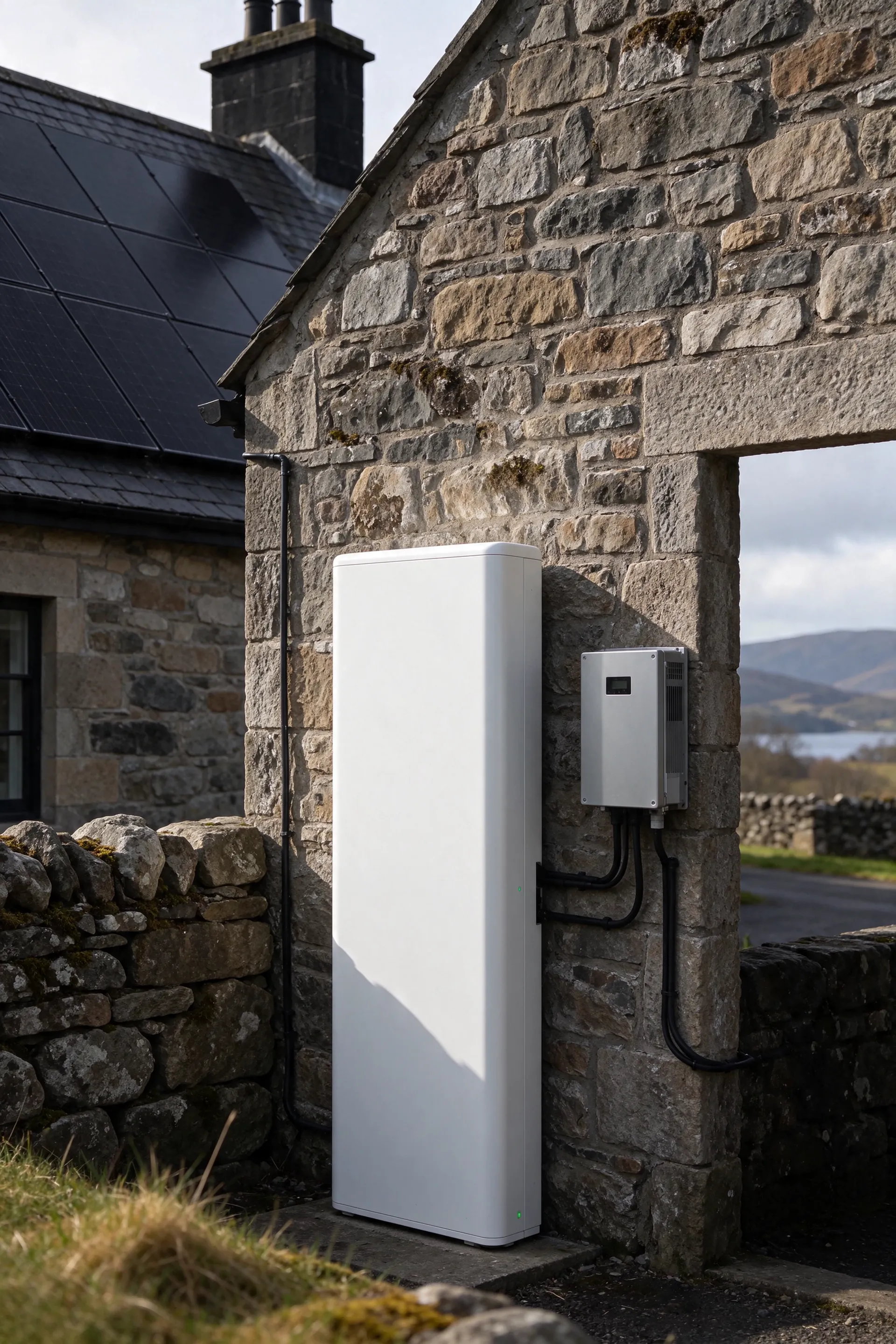
A typical installation includes the battery unit, a hybrid or standalone inverter, and a management system that decides when to charge and discharge based on your generation, consumption, and tariff. Modern systems are app-controlled, so you can see in real time how much you are generating, storing, and using.
The Benefit
Why a battery makes sense for Scottish homes
The clearest benefit of a battery is that it lets you use more of the electricity your solar panels generate. Without storage, surplus generation is exported to the grid for an export tariff that is usually lower than the price you pay to buy electricity back in the evening. A battery closes that gap by keeping the energy on site for when you actually need it.
Scottish homes with longer daylight hours in summer can generate substantial surplus during the middle of the day when the house is often empty. A battery captures that surplus and releases it in the evening, which is precisely when demand peaks. Over a year this can meaningfully increase the share of your electricity that comes from your own roof.
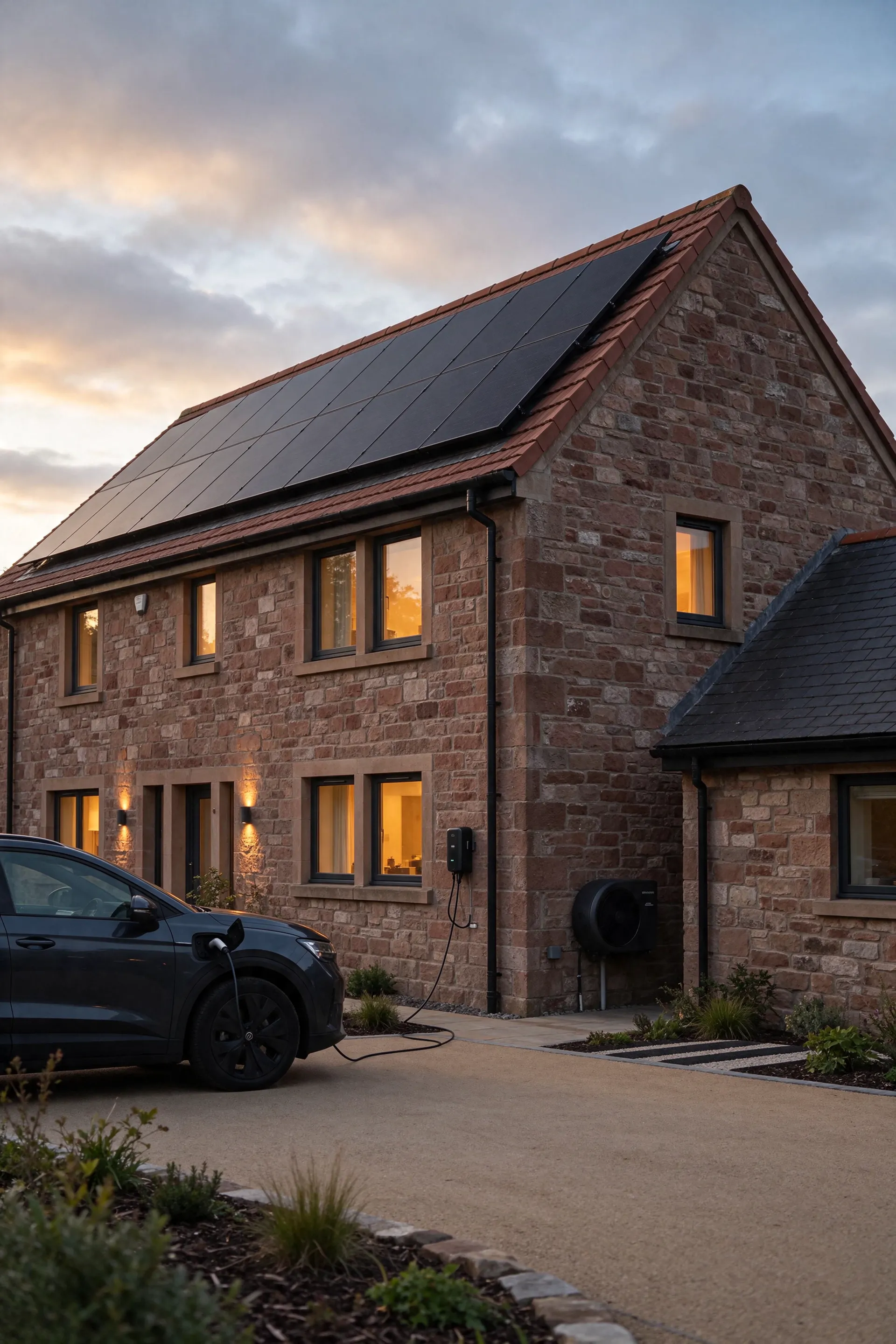
For homes with an air source heat pump, a battery can also smooth the electrical demand of the heating system, and on a flexible tariff it can charge when prices are low and discharge when the heat pump is running hard. The combination works best when the whole system is designed together, which is why we install through certified partners.
Choosing a Battery
Sizing and choosing a battery
Battery capacity is measured in kilowatt-hours, which is the amount of energy the battery can store. Typical home batteries range from around 5 kWh to 15 kWh of usable capacity. The right size depends on how much surplus solar you generate, your evening consumption, and whether you want to cover a single evening or ride through a full day of low generation.
A battery that is too small will fill and empty quickly, exporting the remaining surplus and leaving you short in the evening. A battery that is too large may never fully charge from your solar in winter, so the extra capacity sits unused. A survey models your generation and consumption across the year to recommend a capacity that matches your actual pattern.
If you think you may add solar or a heat pump later, it is worth choosing a system that can be expanded. Some batteries allow additional modules to be added, and a hybrid inverter can accept solar input even if the panels are fitted at a later date. Talk to us about planning the whole system in stages.
Questions
Frequently asked questions
A home battery stores electricity so you can use it later. It charges from your solar panels during the day, or from the grid on a cheaper overnight tariff, and discharges to power your home in the evening or during a price peak. This lets you use more of your own generation and reduce what you buy at the most expensive times.
Thinking about battery storage for your home?
Call us for honest advice on sizing and pairing a battery with solar or a heat pump. We install through certified partners across Scotland.
Last updated: 11 November 2026
Reviewed by the Scottish Energy Efficiency team