Low-Carbon Heating · Scotland
Air Source Heat Pumps in Scotland
Quick answer
An air source heat pump extracts warmth from the outside air, even in cold weather, and uses it to heat your home and hot water. For well-insulated Scottish homes it can replace a gas, oil, or LPG boiler entirely. Suitability depends on insulation, emitter sizes, and space for a hot water cylinder, all confirmed by a room-by-room heat loss survey.
What are the key facts?
Last updated: 11 November 2026- How it works: Extracts heat from outside air to warm your home and water
- Installer: Installed through certified partners only
- Best suited for: Well-insulated homes, especially off the gas grid
- Survey includes: Room-by-room heat loss calculation to size the unit correctly
- Finance: Interest-free credit up to £30,000, subject to status
- Scottish winter: Works down to -20C, designed for Scottish climate conditions
How They Work
How an air source heat pump works
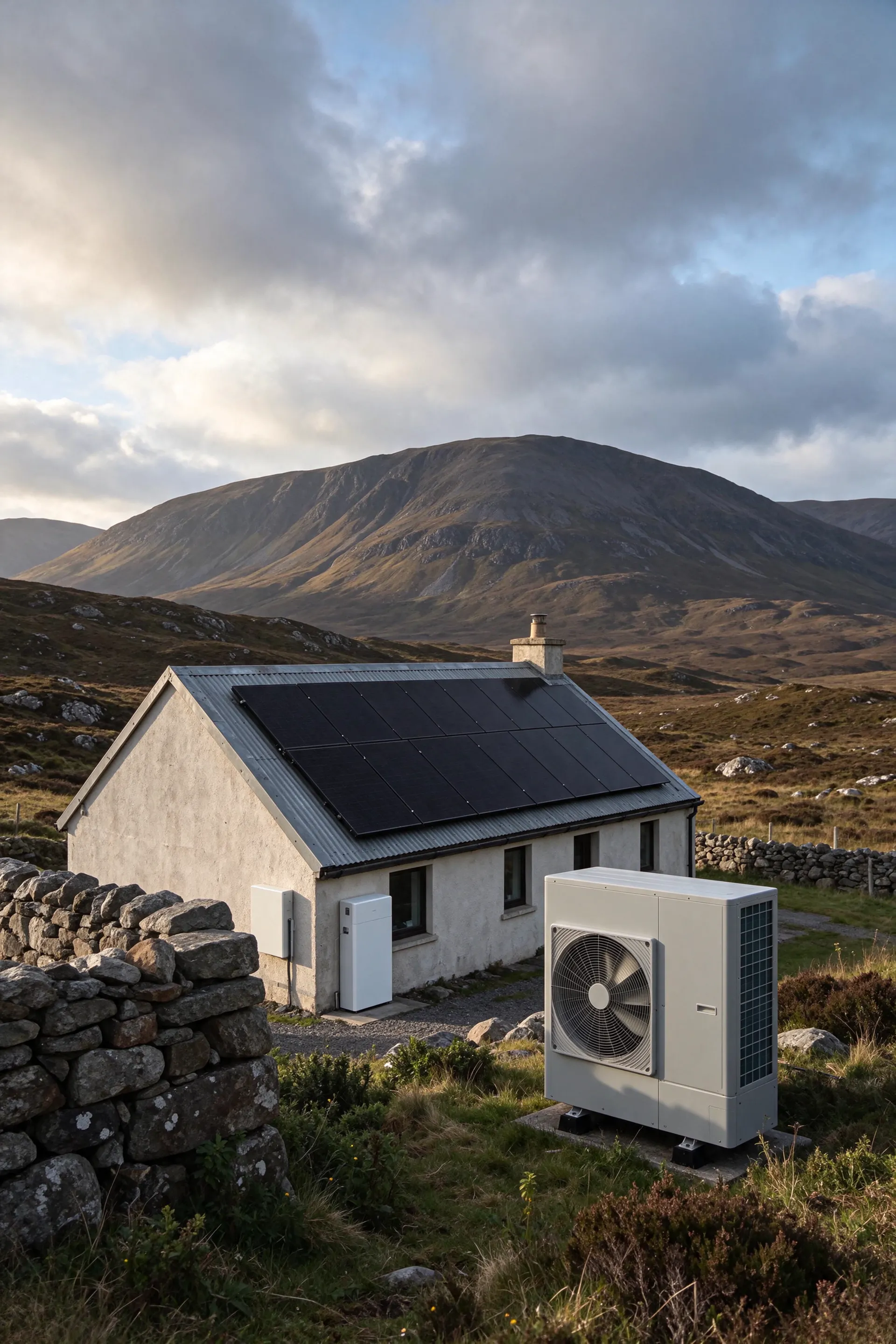
An air source heat pump works on the same principle as a refrigerator, but in reverse. An outdoor unit draws in outside air over a refrigerant-filled coil, which absorbs heat even when the air is cold. A compressor then raises the temperature of that refrigerant, and the heat is transferred into your home\'s heating circuit and hot water cylinder.
Because a heat pump moves heat rather than burning fuel to create it, it can deliver several units of heat for every unit of electricity it consumes. This ratio, the coefficient of performance, is why a well-installed heat pump can be cheaper to run than a boiler, depending on the electricity tariff and how efficiently the building retains heat.
The system runs at lower flow temperatures than a traditional boiler, typically 35 to 55 degrees, which is why good insulation and correctly sized emitters matter. The outdoor unit is sited at the side or back of the property, and the indoor components usually comprise a hot water cylinder, a buffer tank, and the circulation controls.
Suitability
Is a heat pump right for your Scottish home?
A heat pump is a strong match for a well-insulated home with enough space for a hot water cylinder. Modern Scottish properties built to recent building standards are often good candidates. Solid-walled stone cottages and tenement flats can be suitable too, provided insulation and emitter upgrades are factored in, which is why a proper survey matters rather than a rule of thumb.
The two practical questions are whether your home can hold enough heat at lower flow temperatures, and whether you have space for the indoor components. If you are currently on oil or LPG, a heat pump also removes the need for fuel deliveries and on-site tanks, which is a real benefit for rural households. For detailed guidance on oil and LPG replacements, Oil Boiler Replacement Scotland covers off-gas heating options. Part of the Scottish Energy Efficiency network.
For some homes the honest answer is that a modern gas boiler or oil boiler is the more sensible choice today, with a heat pump to follow once the fabric is improved. We help you weigh that honestly rather than pushing a single solution.
The Process
From survey to warm home
A heat pump installation starts with a room-by-room heat loss survey, which is more detailed than a boiler survey. The engineer measures each room, notes the construction, insulation, and window types, and calculates the heat demand at an outside design temperature. This determines the size of the heat pump, the flow temperature, and which radiators need upgrading.
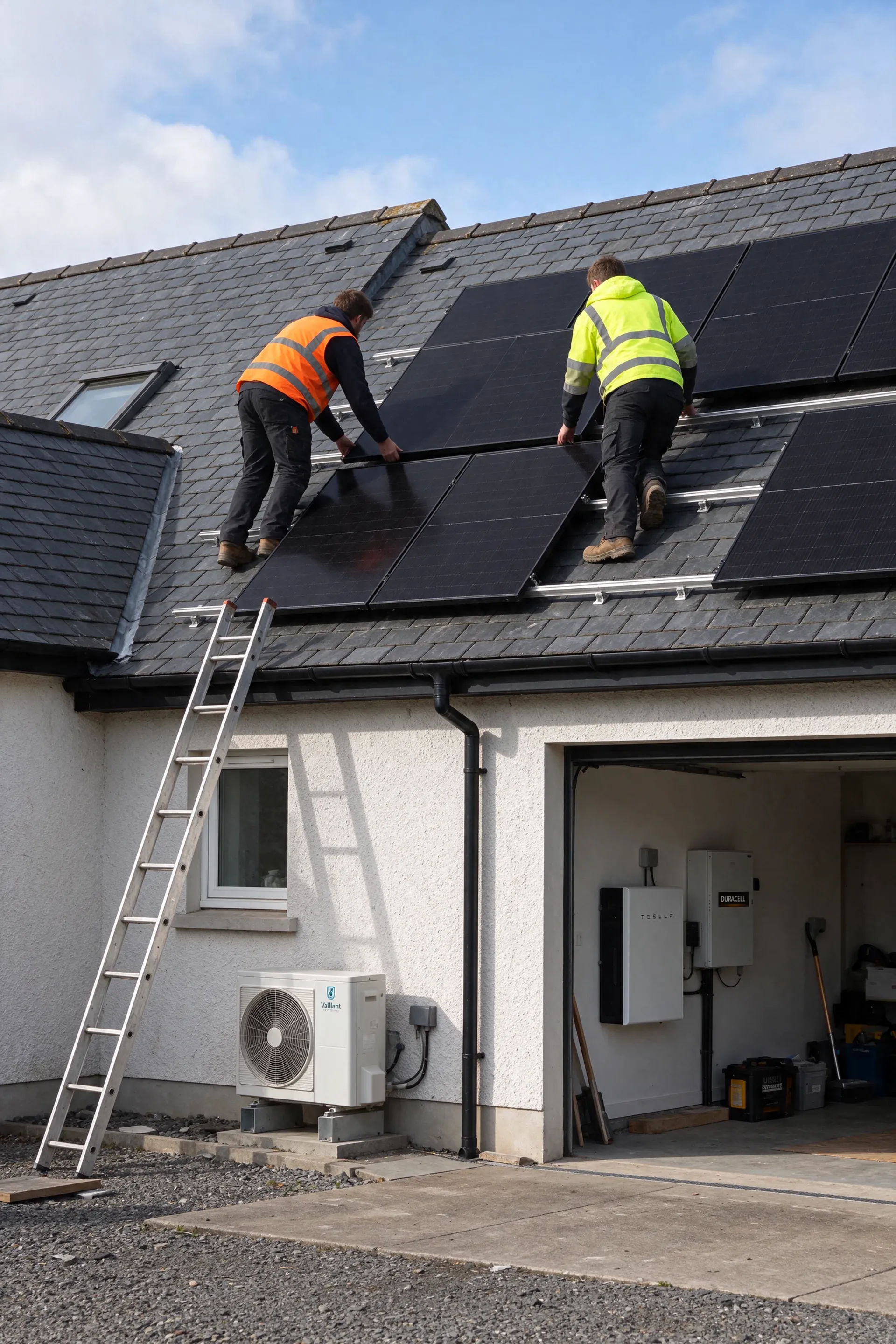
The installation itself typically takes three to five days. The outdoor unit is mounted on a base or wall bracket, the indoor cylinder and controls are installed, the pipework is connected, and any radiator upgrades are completed. The system is then commissioned, balanced, and handed over with the controls explained and the warranty registered.
Pairing a heat pump with solar panels and battery storage can further reduce running costs, because the solar generation can run the heat pump during the day and the battery can store surplus for the evening. For more on combining heat pumps with solar,Solar and Heat Pump Scotland has dedicated guidance. We install through certified partners so the whole system is installed to a consistent standard. Part of the Scottish Energy Efficiency network.
Questions
Frequently asked questions
Yes. Modern air source heat pumps are designed to extract heat from the air down to well below zero degrees, and they are widely installed across Scandinavia and the Scottish Highlands. The key is that the home is well insulated and the heat emitters, whether radiators or underfloor heating, are sized for the lower flow temperatures a heat pump uses.
Considering a heat pump instead of a new boiler?
Call us for an honest assessment of whether a heat pump suits your home. We install through certified partners across Scotland. To explore paying monthly for a heat pump installation, Interest-Free Solar Scotland explains the finance options. Part of the Scottish Energy Efficiency network.
Last updated: 11 November 2026
Reviewed by the Scottish Energy Efficiency team